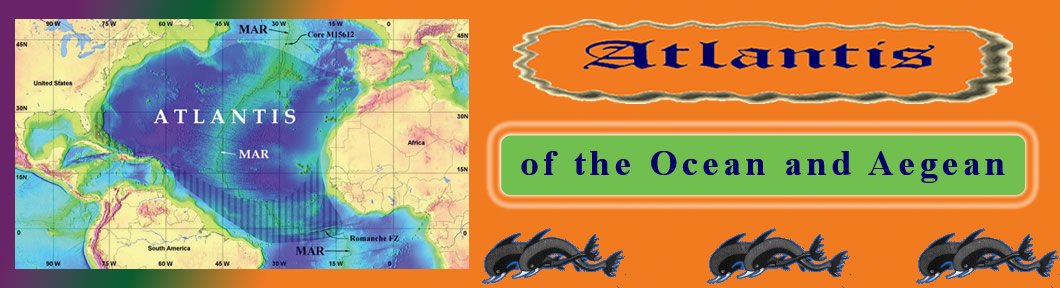
The existence of a large island in the Atlantic Ocean in ancient times, in the age of the prehistoric Dionysus(According to Diodorus Siculus in "Historical Library", book 5, Ch. 19, 20, 21) Another amazing report about the islands that existed in the Atlantic west of Libya, during the prehistoric era, is made by the historian, geographer and traveler Diodoros Sikeliotis. Diodorus focuses on an almost paradisiacal island which he does not name, but claims about it that: Below are Diodorus' descriptions:
In another part of his "Historical Library" Diodorus mentions the way in which the above island of the Atlantic Ocean was first discovered:
Then, in Ch. 21 par. 1, 2 the Siculus mentions the existence of many islands with the largest being the Prettanian island (he means the British island) opposite the Galatian coast and that this island "... in the old days remained far from any foreign influence because not even for neither Dionysus (or Dionysos), nor Heracles, nor our other heroes and leaders, are reported to have ever campaigned on it, while in our own times Caesar was the first to subdue this island...". Historic Analysis - Comments
Here at this point 21-2 , Diodorus is revealing about the time period he is referring to: He may not give a specific date, but he says that these islands in the Atlantic Ocean existed from the "old days", from the time of the prehistoric Dionysus.
|
 |
The Atlantians and the Amazons of Libya
|
The Atlantians and the Amazons, according to Diodorus Siculus (Historical Library, book three, chapters 53, 54, 56)The ancient Greek historical Diodorus of Sicily provides us with many interesting facts by writing very revealingly in his book above about the life and culture of two peoples who lived in Libya (Africa): 1) about the Amazons, a female-dominated tribe that lived on the island Hespera in the Lake Tritonis near the Atlas mountain, 2) about the Atlantians, the most civilized people of that region who lived in an area on the African coast of the Ocean (at that time this area was called Libya), with the coastal city of Cerne as their capital, 3) for the conquest of the Atlantians by the Amazons 4) about another race dominated by women, called the Mermaids, who lived next to the Atlanteans and constantly attacked them 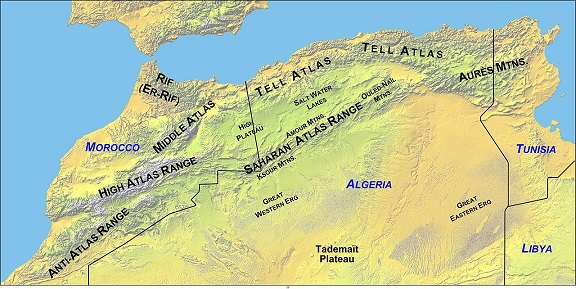 Since at the time of Diodorus most writers believed that the only Amazons who existed in the prehistoric ages were the Amazons who inhabited the Black Sea, Diodorus additionally specifies in the same book (III, chapter 52) that the Libyan Amazons performed deeds of great worth and they lived much earlier (older) than the Pontic Amazons (who lived in the Thermodontus River). He also mentions some chronological orientation, writing that "the generation of the Libyan Amazons disappeared many generations before the Trojan war, while the women of the Thermodontus River flourished just before the Trojans. And it is not unreasonable that the later and better-known ones inherited the glory of the older ones because of the intervening years". Pay close attention below, the descriptions of the Diodorus are shocking, according to them the history of the Atlantians of Libya is closely intertwined with the history of the African Amazons.
The invasion of the Amazons in the land of the Atlantians of Libya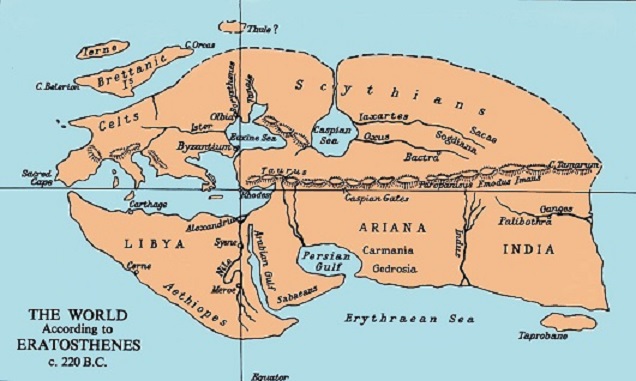 To the left on the coast of Libya was the city of Cerne, capital of the Atlantians.
The Atlantes of Africa and the "sea of Atlantis" according to HerodotusDiodorus Siculus was not the only historian who wrote about an Atlantean tribe that once lived on the coast of Northwest Africa (then called Libya). A few centuries before Diodorus, the ancient historian Herodotus (484-425 BC), who was rightly established as the "father of history", gives us approximately the same information, describing the geography of Africa and the customs and habits of the peoples who lived there earlier in this, in his work "Historiai". Herodotus mentions that there used to be a people who lived in different areas of the Atlas mountain. He even describes the mountain with the shape of a perfect circle (conical), with a small area and with very high peaks that are impossible to see because they were covered with clouds in winter and summer. From the name of this mountain these people were called "Atlantes".
Related to the above is also the name given by Herodotus for the sea to the west of North Africa, where the Atlantes were located and outside the columns of Herakles, in his first book. He calls it "the sea of Atlantis" and not the Atlantic Ocean, describing the seas around the Mediterranean:
Historical analysis - CommentsIt may be curious but not coincidental that first Herodotus mentions a Libyan people named "Atlantes" and after 400 years Diodorus Siculus mentions a people named "Atlantians" (who coexisted with the Amazons and the Mermaids). Were they two different peoples living in different periods of time or were they the same people? From the fact that they lived roughly in the same areas of Northwest Africa and their names are formed from the same root "atl" or "atlan" it is inferred that both peoples were at least related (in origin) tribes who may have lived at different times. And furthermore, if they lived in the same time period then it surely follows that they were the same people (the slight difference in the ending of the name does not play any role here). So they were a tribe or two related tribes with names that refer to the land of Atlantis. If we follow, during or before its final destruction, the historical route of the inhabitants of Atlantis starting from the "Atlantis island of the Ocean", then it is reasonable to expect the migration of the surviving Atlanteans precisely to the regions of Libya described by Herodotus and Diodorus Siculus. These coastal areas around the Atlas Mountains became their new homeland and their springboard for new migrations to the east. Even their distant descendants, the Atlantians, lived there until "many generations before the Trojan war" according to Diodorus. The "Atlantes" of Herodotus and the "Atlantians" of Diodorus Siculus were doubtless the descendants of the survivors of the deluge, and finding themselves in North Africa, evidently retained memories of their gods, traditions, and culture, "the source of which was the ocean' (i.e. the Atlantic). It is also more than interesting and not coincidental that Herodotus (450 BC) had already called the ocean to their west by the name "Sea of Atlantis" almost a hundred years before Plato. |
The Titan-Atlantes spread their gods and mythology to the worldIn the following chapters and paragraphs, Diodorus Siculus describes the life of the Atlantians, elements from their mythology and their origin from the Titans, Also, how were their gods born that their worship spread to many peoples of the earth, even to the ancient Greeks:
And Diodorus Siculus continues with the birth of the Titan race:
Who were the Titans, the sons of King Uranus?Book III, chapters 60, 61: Diodorus Siculus mentions that the three most prominent sons of Uranus was Cronus, Atlas, and Hyperion:
About the Titan Cronus
Historical analysis - CommentsThese are in summary what Diodorus Siculus mentions about the story-mythology of the Libyan Atlantians and the genesis of their gods. Their knowledge, legends and traditions, while they had originated in the ocean, were spread by their rescued ancestors, to the coastal peoples of West Africa. And finally we notice that they were "integrated" into the mythology and religious consciousness of the Greeks, but also of some other peoples, barbarians, as Diodorus clearly mentions. (More in our other texts). To confirm all of the above, Diodorus Siculus also mentions the story contained in the Iliad about the journey of the "goddess" Hera, the daughter of Cronus and Rhea, to the "ends of the fertile earth to meet her forefathers, Oceanus, the father of all of the gods and Tethys, the mother". For a better understanding, I quote this whole paragraph of the Iliad (rhapsody X 200-1), in which Hera (who helped the Danaans in the Trojan War), being in the palace of Olympus, speaks to the goddess Aphrodite (supporter of the Trojans):
It is also remarkable and worthy of notice that Diodorus plainly asserts in his above comprehensive account (book 3, chapters 56 to 61) of the genealogy and theology of the Atlantians (or Atlantes) of Libya, that the gods whom they worshiped were their ancient ancestors [e.g. Uranus, Titania-Earth, Titans-Titanids-Atlas-Atlantis etc.]. That is, their gods were their first leaders, kings, heroes, who stood out because of their good character, their wisdom and the important work they offered to people in all fields (Administration, astronomy, agriculture, culture) thus obtaining considerable glamor and glory. They were mortals who were eventually proclaimed by the multitudes as eternal "gods", and their name was given to the stars, planets and sky or geological natural elements (rivers, lakes, seas, volcanoes, mountains, etc.). A characteristic part of Diodorus' narrative is the fact that there were two different kings named Zeus, of different generations. The older Zeus, I call him Zeus I, was the brother of Uranus and was king of Crete. The younger Zeus, I call him Zeus II, was one of the sons of Uranus and brother of Atlas, he was the Olympian Zeus who reigned over the whole world. The older Zeus I who was king only of the island of Crete had ten sons, whom he named Kouretes, he also gave the island the name Idaia, as his wife was also called. After his death, he was buried on the island and his tomb was displayed until the time of Diodorus. © Copyright: Theodoros Paschos, Athens, 2016
|
|
Samothrace was inhabited before the flood of the Bosphorus-Hellespont.The Atlanteans's Settlement |
Or else the flood of DardanusThe ancient Greek historian Diodorus of Sicily (Siculus or Sikeliotis ) provides us with important information about the history of the inhabitants of the island of Samothrace and about a great flood in the Black Sea and the Bosphorus Strait (in "Historical Library", book 5, paragraphs 47-48). Diodorus states that Samothrace was inhabited by natives but nothing has been handed down to us about the first people who founded it and their rulers. He mentions the opinion of some people that, in the past, it was called Saonisos and took its current name from the inhabitants who went from Samos and Thrace. These natives had their own ancient language, with many words preserved to this day in the sacrifices.
Keep as a first thought in your mind the conclusion easily drawn by Diodorus himself, from his own description of the accounts of the inhabitants that "the island of Samothrace was inhabited before the flood of Black Sea" by people who had their own ancient language But, who were the inhabitants (peoples) who lived in Samothrace before the flood and some were saved from it? Diodorus himself describes that after the flood many peoples lived scattered on the island, but someone named Saon, an inhabitant of the island, the son of Zeus or Hermes and the nymph Hespera, managed to unite them and, setting laws, named it Saona (Saos is called today and the mountain that exists) from him, and he divided the people into five tribes. But, for the only race whose exploits Diodorus describes, it was the race of the Atlantida Electra (apparently this was the most dominant of the five, the only one left in tradition). So Diodorus writes (book 5):
In his book 3, Diodorus mentions another story, that the Amazons also passed through the island, led by Myrina, who started from Lake Trichonida in Libya, expanded to the Aegean islands, occupied Lesbos and they founded Mytilene and after being carried away by storms they reached a desert island where they established altars to the great goddess (meaning the great goddess of Phrygia, Cybele), offered sacrifices and named it Samothraki which in the Greek language translates as "sacred island". However, the Amazons did not remain there but returned to their mainland country."Historical Library", book 3, paragraph 55, 7-8
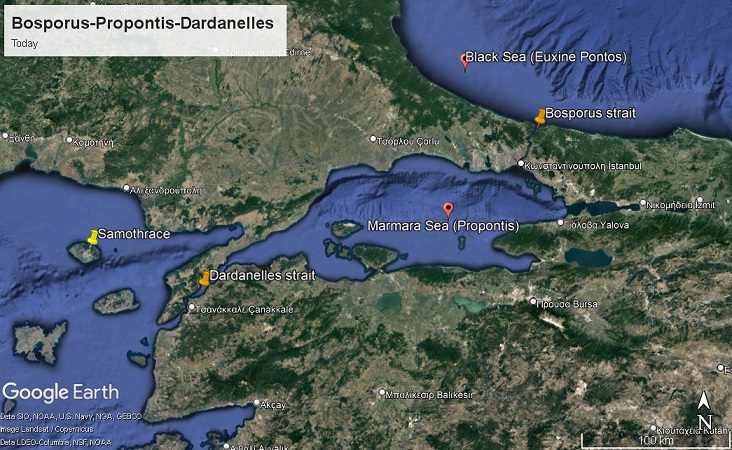
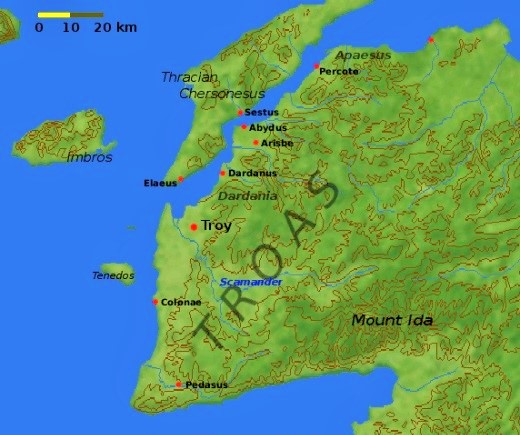
The revelations that Diodorus makes are important because they change part of the traditional view of prehistory: 1) It reveals that the first founders of the Kingdom of Troy (its former name was "Dardania") were a tribe of Atlanteans who remained in Samothrace even after the flood of the "Euxine Pontus". Dardanus, the founder of the Dardanian kingdom later renamed Troy (present-day Ilion), was of Atlantean origin, being the son of the Atlantida Electra. I remind you that Electra Atlantis was one of the seven daughters of Atlas who married prominent rulers, heroes and "gods" and became progenitors of much of the human race. In this case, she mixed with Zeus, writes Diodorus, but in all probability she mixed with the Samothrace king Saona, as all the kings or heroes of that time passed into mythology as "gods" or descendants of "gods". 2) A tribe of Atlanteans initiated foreigners into the rites of the mysteries and performed them gloriously as Iasion, to whom these were assigned, was the son of Atlantida Electra and the brother of Dardanus. 3) That the inhabitants of Samothrace kept in their memory a very large old flood coming from the Black Sea that submerged a part of their island. And they performed religious ceremonies in memory of their salvation. 4) This powerful flood of the Black Sea-Hellispont was established in the memories of the peoples of Samothrace, Thrace and N. Western Asia to be called "the flood of Dardanus", in honor of their leader Dardanus, who created the kingdom of the Dardanians in the same area. With the same name it spread to the inhabitants of the rest of the cities of Greece and Asia, apparently through their initiation into the Kaverian Mysteries. This is how it appears today in mythology as the "Dardanus flood". Modern geological evidence from scientific investigationsThere is geological evidence that confirms the authenticity of this myth about the flood of Samothrace, Thrace, the Black Sea, north-western Asia Minor. At the beginning of the Pleistocene period, the Black Sea was much smaller than today and received the waters of the Caspian Sea, which was at a higher level. Part of the water of the Black Sea was pouring into the Sea of Marmara. In those days there was a river in the Dardanelles and not a strait like today. Due to the relatively high level of the water surface in the Caspian Sea, as well as the Black Sea, and the absence of a direct connection to the Mediterranean Sea, the amount of salt in these locations was much lower than today.
© Copyright: Theodoros Paschos, Athens, 2016
|
| Prehistory, Atlantis and "Gods": On Bluesky and Alter TV channels | |
I discuss on T.V. with L. Georgiadi (Bluesky, 8/7/2009) :1) Prehistory and Atlantis --- 2) The content of Vassilis Paschos book "The Atlanteans and Not the Gods" |
The view of "Atlantis Museum"My interview on the TV show "Gates of the Unexplained" |
Books Presentation |
||
Science Fiction
Author: Theodoros Paschos. Pages 320 Two Greek scientists with their technology find solution to the problem of communication with intelligent beings in the universe chasing the future of humanity. Seeking to solving various mysterious phenomena starring in Mission Teams to watch the flying saucers that appear on Earth to Mars and the Moon and to communicate with extraterrestrial beings. In doing so they get involved in adventurous and dangerous stories, but they also discovered the remnants of the technology of Atlantis into the ocean depth. You can preview or get the book from the Website: smashword.com/ |
The Atlanteans and Not the Gods
Author: Vassilis Th. Paschos. Pages 350 The author Mr Vassilis Paschos, with this book penetrates research into antiquity and by demystifying legends and traditions, proves the existence of the Atlanteans. For their original residence, the cradle of its culture, their lost country, the author quotes rich material and convincing facts ... |
Atlantes, Not the "Gods"
Αuthor: Vassilis Th. Paschos. Pages 80 The new and daring theory of Mr Paschos, is based on elements from Homer, Hesiod, Plato, Proklos, Plutarch, Markellaus and other ancient Greek and Latin writers (their works are mentioned in his book), on Egyptian papyrus, the Gilgames epic poetry of Babylonians, the Bible, the traditions of the people around Mediterranian and Central America and on ancient findings in these areas. You can preview or get the book from the Website: Smasword.com/ |